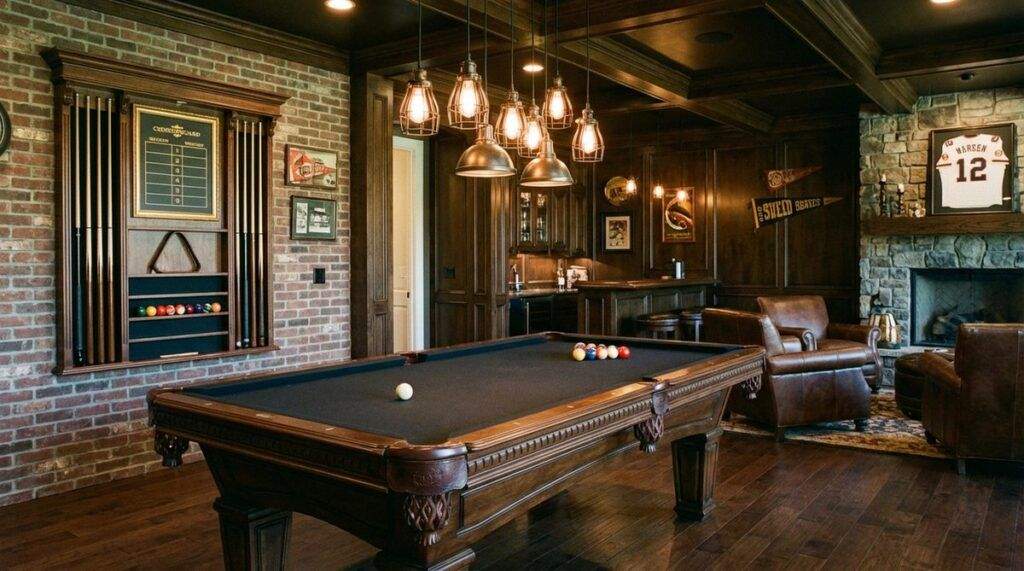
Your Home Game Room Starts Here
Buying a pool table is one of those purchases that sounds simple until you start looking. Sizes, slate versus MDF, felt colors, cushion rubber types — the rabbit hole goes deep. After helping friends and family navigate this decision more times than I can count, here’s the no-nonsense guide to getting the right table without overpaying or ending up with something that warps in six months.
Size: Measure Twice, Buy Once
Pool tables come in four standard sizes: 7-foot (bar size), 8-foot (home standard), 9-foot (tournament regulation), and the rare oversize models. Here’s the critical part: you need about 5 feet of clearance on every side of the table for a standard 58-inch cue. That means:
7-foot table: Minimum room size of 13′ x 16′
8-foot table: Minimum room size of 13.5′ x 17′
9-foot table: Minimum room size of 14′ x 18′
If your room is tight, shorter cues (48″ or 52″) exist for wall shots, but they compromise your play. Before anything else, measure your space. This single step eliminates more buyer’s remorse than any other.
Slate vs. MDF: The Big Decision
The playing surface is the most important component, and you’ve got two options:
Slate is a natural stone (usually 3/4″ to 1″ thick) that’s been ground perfectly flat. It’s heavy (a three-piece slate set weighs 400-600 pounds), durable, and the gold standard for any serious player. Good slate tables start around $1,500 and go up to $5,000+ for premium models. They hold their level for decades and maintain consistent ball roll.
MDF (Medium Density Fiberboard) is the budget option, found in tables under $1,000. It’s lighter, cheaper, and fine for casual play. The downside? MDF can warp over time, especially in humid environments. If your game room isn’t climate-controlled, this becomes a real problem within a year or two.
My honest recommendation: if you’re spending enough to buy a pool table, spend enough to get slate. A $1,800 slate table will outperform and outlast a $900 MDF table by a decade.
Felt (Cloth): Speed and Durability
Pool table felt isn’t actually felt — it’s a wool or wool-blend fabric (sometimes called baize). There are two main categories:
Woolen cloth is fuzzy, slower, and more forgiving. It’s standard on most home and bar tables. Brands like Championship Saturn or Invitational are solid choices in the $100-$200 range. Expect to replace it every 3-5 years with regular play.
Worsted cloth (like Simonis 860 or 760) is smooth, fast, and used on tournament tables. It costs $250-$400 but lasts 5-10 years. Ball roll is more accurate and consistent. If you’re an enthusiast, worsted cloth is worth every penny.
Color doesn’t affect play, so go wild. Traditional green is classic, but tournament blue, red, and charcoal all look sharp in a home setting.
Cushions and Rails
The rubber cushions (also called bumpers or rails) determine how the ball bounces. K-66 profile rubber is the industry standard for American-style tables. Cheap tables use synthetic rubber that hardens over time, leading to dead bounces. Look for natural gum rubber cushions — they maintain their responsiveness for years.
Rail wood matters too. Hardwood rails (maple, oak) are more stable than particle board rails. Check this before buying — it’s a detail many budget tables cut corners on.
Frame and Legs: What Holds It All Together
The frame needs to be rigid enough to support a heavy slate surface without flexing. Solid hardwood frames are ideal. Some mid-range tables use engineered wood with hardwood veneers — these are acceptable if the construction is solid. Avoid tables where the frame feels light or creaky when you press on it.
Leg levelers are essential. Every floor has imperfections, and a pool table that’s even slightly unlevel will drive you crazy. Look for adjustable leg levelers that let you dial in perfect level after installation.
New vs. Used: The Smart Move
Used pool tables are one of the best deals in home entertainment. People move, downsize, or lose interest, and a $3,000 table ends up on Facebook Marketplace for $800. The key is inspecting the slate for cracks, checking the cushion bounce (drop a ball against the rail — it should rebound cleanly), and factoring in the cost of new felt and professional moving.
Moving a pool table costs $300-$600 for disassembly, transport, and reassembly with re-leveling. Add $150-$400 for new felt. So a $800 used table might cost $1,300-$1,800 all-in — still a great value if the slate is in good shape.
Accessories You’ll Need
Most tables come with a basic accessory kit, but the quality is usually poor. Budget an extra $150-$300 for:
Cues: Two decent house cues ($30-$50 each) plus a personal cue if you play seriously ($80-$200)
Ball set: Aramith Standard ($30) or Aramith Premium ($80) — cheap balls chip and discolor fast
Triangle rack: Wood or aluminum ($10-$20)
Brush: A horsehair table brush ($15) for keeping the felt clean
Chalk: Master chalk is $5 for a dozen. Keep a cube at each end of the table.
Cover: A fitted vinyl or naugahyde cover ($40-$80) protects the felt from dust, spills, and sunlight
Brands Worth Considering
Budget ($1,200-$2,000): Fat Cat Tucson, Mizerak Donovan — solid slate tables at entry-level prices
Mid-range ($2,000-$3,500): Olhausen, Brunswick Contender series — excellent build quality, great warranties
Premium ($3,500+): Diamond, Brunswick Gold Crown, Olhausen Grand Champion — what you’ll find in pool halls and tournaments
Pull the Trigger
A pool table is a centerpiece purchase. Get it right and your game room becomes everyone’s favorite hangout for years. Measure your room, go slate, don’t cheap out on felt, and consider the used market. Your future self, standing over a perfect bank shot at midnight with friends, will thank you.