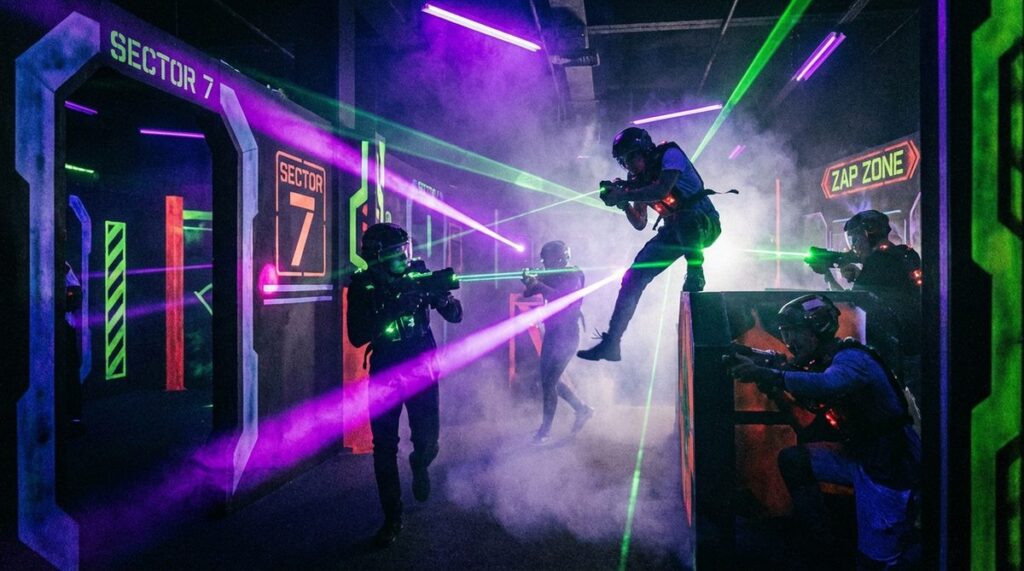
Laser tag takes about ten seconds to learn and a lifetime to master. You strap on a vest, grab a phaser, and enter a blacklight arena where the only thing standing between you and victory is your ability to move fast, aim straight, and not panic when someone flanks you from the fog machine. Here’s how to dominate.
Before You Enter the Arena
What you wear matters more than you think. Dark clothes — black, navy, deep purple — blend into the blacklight environment. That white graphic tee? It turns into a glowing target. Comfortable shoes with good grip are essential since most arenas have ramps, stairs, and obstacles. Leave anything loose (scarves, dangling jewelry, untucked shoelaces) in a locker.
Arena Layout Basics
Most indoor laser tag arenas share common design elements:
- Bases: Team spawn points, usually in opposite corners. Some games require you to tag the enemy base for bonus points.
- High ground: Elevated platforms or ramps. Controlling the high ground gives you sightlines across the arena.
- Corridors: Narrow passages where encounters are close-range. Move through quickly — stopping in a corridor makes you easy prey.
- Open zones: The center of most arenas. Crossing open space without cover is the fastest way to get tagged.
- Fog zones: Areas with heavy fog machine coverage. Visibility drops but so does the enemy’s ability to spot you.
Core Strategies
Movement
Never stand still. A stationary player is a tagged player. Move in unpredictable patterns — don’t just circle the arena in the same direction every time. Sprint between cover points, pause to scan, then move again. Your vest sensors usually have a cooldown after being hit, so use that brief invincibility window to reposition aggressively.
Aiming
Laser tag phasers are infrared, not actual lasers, which means there’s no visible beam to guide you. Your sights (usually a red dot or notch) need to be aligned with the target’s sensors. Front and back chest sensors are the largest targets — shoulder and phaser sensors score points but are harder to hit.
Team Play
Stick with a partner. Two players moving together can cover each other’s blind spots and set up crossfire on solo opponents. Call out enemy positions — “left side, ground floor” is more useful than “over there!” If your team controls the high ground and the enemy base approach, you control the game.
Advanced Tactics
| Tactic | When to Use | Risk Level |
|---|---|---|
| Base camping | Defending a score lead | Low (but boring) |
| Rush offense | When trailing with time running out | High (but exciting) |
| Flanking | When the enemy is focused on your teammates | Medium |
| High ground hold | Anytime you can secure it | Low-Medium |
| Fog lurking | When you’re outnumbered | Medium |
What to Expect at a Venue
A standard session runs 10–15 minutes. Most venues do a quick briefing covering rules, how the equipment works, and safety guidelines. Typical rules: no running (enforced loosely), no physical contact, no covering your sensors with your hands. Scores display on screens after each round — individual stats usually include tags made, times tagged, accuracy percentage, and total points.
Best Age for Laser Tag
Kids as young as 6 can handle most laser tag setups, though the equipment can be heavy for the smallest players. The sweet spot for competitive play is 10 and up. Many venues offer separate sessions for younger kids and teens/adults — worth asking about if you’re planning a group visit.