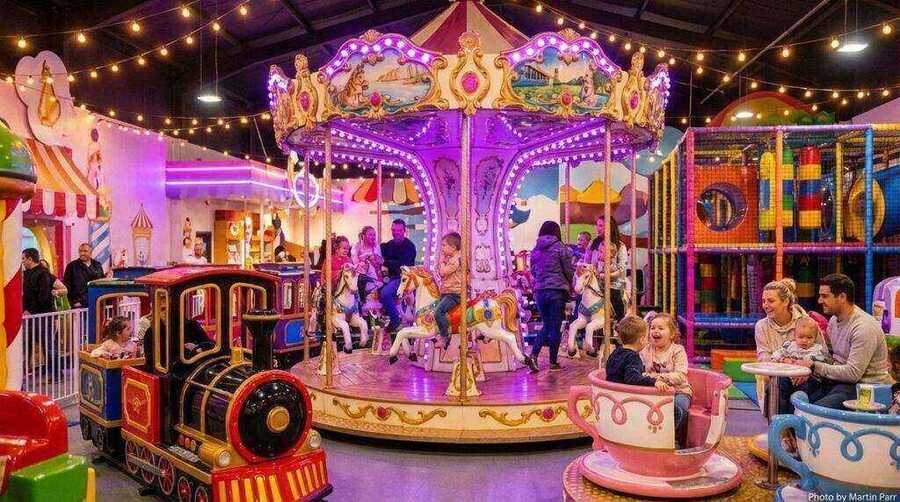
Watching a three-year-old ride a miniature carousel for the first time is one of those parenting moments that just sticks. Their eyes go wide, they grip the pole like their life depends on it, and then the smile hits — pure, unfiltered joy. Kiddie rides are where entertainment center memories begin.
Types of Kiddie Rides
- Carousels: The classic. Small-scale merry-go-rounds with animal seats (horses, lions, dragons) that gently rise and fall. Speed is slow and predictable — perfect for first-timers.
- Train rides: Miniature trains that loop a short track through a themed area. Kids love these because they feel like they’re going somewhere, even though the loop is 200 feet.
- Coin-operated rides: Small vehicles (cars, rockets, horses) that rock or spin for 60–90 seconds per token. Usually positioned near the entrance or food court.
- Soft play areas: Padded climbing structures, ball pits, and mini slides designed for ages 2–6. These are essentially contained energy-burning zones.
- Teacup spinners: Circular rides where the cup gently rotates. Some let kids control the spin speed with a center wheel.
Age and Safety Guide
| Age | Best Rides | Parent Notes |
|---|---|---|
| 1–2 | Coin-op rides with parent holding, soft play | Stay within arm’s reach at all times |
| 3–4 | Carousel, train, teacup spinners | Ride alongside if nervous, most seats fit a parent |
| 5–6 | All kiddie rides, transitioning to some bigger attractions | This is the age they start wanting independence |
Tips for Parents
- Do a walk-through first. Before buying tokens or loading a game card, walk the entire kiddie area with your child. Let them see what’s available and point out what excites them. Avoids the meltdown of discovering the dragon ride after you’ve already spent all your credits.
- Bring socks. Soft play areas almost always require socks, and venues sell them for $3–5 a pair. Pack extras.
- Manage expectations on prizes. Younger kids don’t understand that 12 tickets buys a temporary tattoo, not the giant stuffed bear. Set the prize target together before playing.
- Time your visit. Weekday mornings are the sweet spot for little kids. Fewer crowds, shorter waits, and staff who have more time to help nervous first-timers.
- Don’t force it. If a ride scares them, that’s okay. Come back to it later or skip it entirely. Forcing a kid onto a ride they’re afraid of turns a fun day into a bad memory.
Making the Most of It
Kiddie areas are designed for short attention spans, which works in your favor. Most visits last 60–90 minutes before little ones are ready to leave. Budget accordingly — you don’t need the all-day pass for a toddler. A $10–15 game card covers plenty of rides and leaves room for a snack break in the middle.