How to Plan a Birthday They’ll Actually Remember
Your kid’s been counting down the days for weeks. Their friends are hyped. And you? You’re staring at a Pinterest board at midnight wondering how any of this is supposed to come together. Take a breath — planning a great birthday party is simpler than the internet makes it look. You don’t need a $2,000 budget or a professional event coordinator. You need a solid plan, the right venue, and about three weeks of lead time.
Start with the Guest List, Not the Theme
Most parents do this backward. They pick a theme, book a venue, then realize they’ve invited 30 kids to a space that fits 15. Start with numbers. For kids under 7, a good rule of thumb is their age plus one — so a 5-year-old gets 6 guests. For older kids, 8 to 12 guests is the sweet spot. Enough for team games, small enough to manage.
Send invitations at least three weeks out. Digital invites through Evite or Paperless Post work great and let you track RSVPs without chasing people down. Include start time, end time, location, and any special instructions like “wear socks” for trampoline parks or “drop-off is fine” if that’s your preference.
Picking the Right Venue
Home parties work for small groups, but venue parties take the stress out of setup and cleanup. Here’s how to match the venue to the age group:
Ages 3-5: Play cafes, indoor playgrounds, or simple backyard setups. Keep it to 90 minutes max — little kids burn out fast. Avoid anything too stimulating or loud.
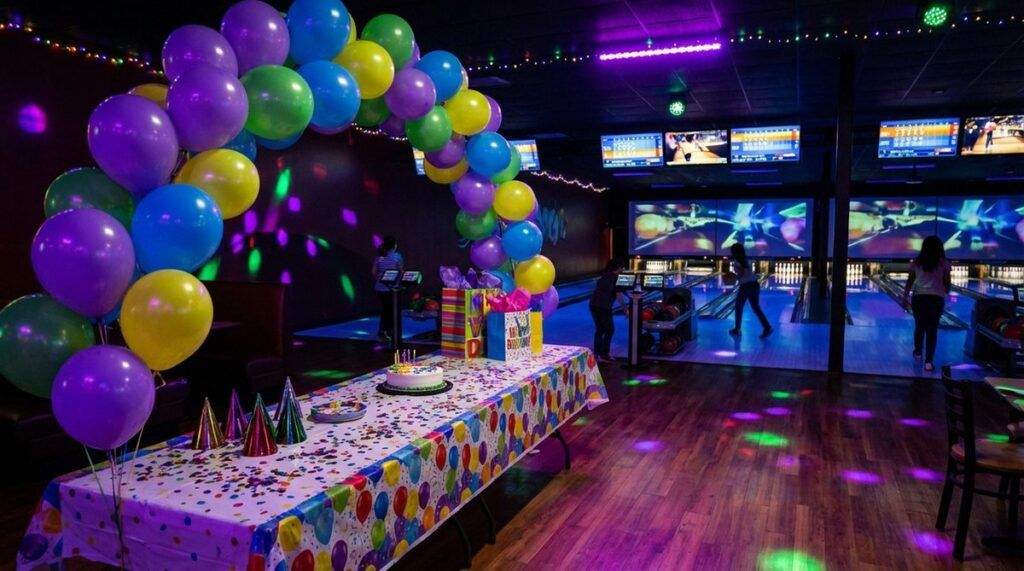
Ages 6-9: This is the golden zone for bowling parties, trampoline parks, and arcade centers. Kids this age have enough coordination to actually play and enough energy to go hard for two hours. Party packages at entertainment centers usually include a reserved area, food, and activities for $20 to $35 per kid.
Ages 10-12: Escape rooms, laser tag, and go-kart venues hit the right note. Kids this age want to feel cool, not babyish. Skip the character appearances and go for experiences that feel grown-up.
The Party Timeline That Actually Works
Every great party follows the same basic flow. Here’s a two-hour template that prevents chaos:
0:00-0:20 — Arrival and free play. Not everyone shows up on time. Have something low-key available — coloring stations, free arcade play, or just an open play area. Don’t start the main activity until most guests have arrived.
0:20-1:00 — Main activity. This is your bowling, laser tag, or whatever the centerpiece is. Let the venue staff handle the logistics. Your job is just to make sure everyone’s included.
1:00-1:30 — Food and cake. Pizza is the universal crowd-pleaser for a reason. Order more than you think you need. Do cake and singing right after food while everyone’s seated. Don’t drag this out — kids want to get back to playing.
1:30-1:50 — Presents or free play. Opening presents at the party is optional and honestly, increasingly skipped. If you do it, keep it moving. If not, use this time for free play or a second round of the main activity.
1:50-2:00 — Goodie bags and goodbye. Hand out bags as kids leave. Keep them simple: a small toy, some candy, maybe a themed sticker. Nobody needs a bag full of junk that ends up in the trash.
Food That Works (and Food That Doesn’t)
Keep it simple. Pizza, chicken nuggets, fruit, and juice boxes cover 90% of kid preferences. Always ask about allergies on the invitation. Have at least one dairy-free and one gluten-free option available — it doesn’t have to be fancy, even a fruit platter and some chips will do.
For cake, sheet cakes from Costco or a local bakery taste great and feed a crowd for under $30. Custom fondant cakes look amazing on Instagram but most kids just want frosting and sprinkles.
Budget Breakdown: What to Expect
A typical venue party for 10 kids in the Westchester/NYC area runs $300 to $500 all-in. Here’s how that breaks down:
Venue package: $200-$350 (includes activity, party room, basic food)
Extra food/drinks: $30-$60
Cake: $20-$40
Goodie bags: $30-$50 ($3-$5 per kid)
Decorations: $15-$30 (balloons, tablecloth, banner)
You can absolutely do it for less. Home parties with DIY activities can come in under $150 total. The key is deciding what matters to your kid and spending there, not everywhere.
Three Mistakes to Avoid
Over-scheduling: You don’t need 6 activities for a 2-hour party. One main event and some free play is plenty. Over-scheduled parties stress kids out and stress parents out even more.
Forgetting the parents: If it’s a drop-off party, communicate that clearly. If parents are staying, have coffee and chairs available. Nothing worse than standing in a loud arcade for two hours with no place to sit.
Waiting too long to book: Popular venues book up 4 to 6 weeks in advance for weekend slots. If your kid’s birthday falls in spring or early summer (peak party season), book even earlier.
Make It Personal
The best birthday parties aren’t the most expensive ones — they’re the ones where the birthday kid feels like a star. Use their favorite colors for decorations. Play their favorite songs. Let them pick the activity. A $300 bowling party where your kid is beaming the whole time beats a $1,500 extravaganza where they’re overwhelmed and cranky. Plan smart, keep it fun, and the memories will take care of themselves.